


A Real Robot Cafe to Open... Imitation-Learning Robot Handles Cleaning and Dishes
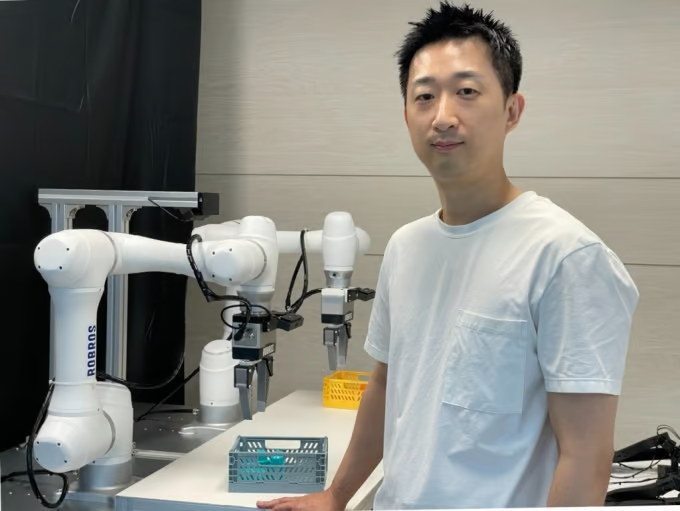
"Our goal is to open a cafe operated by humanoid robots by the end of 2025. It will be a real robot cafe where robots do not just make coffee but also clean and wash dishes."
Roh Seungjun, CEO of Robros, said current robot cafes are essentially no different from regular cafes. Machines prepare drinks based on fixed programs, but humans still handle everything else. He emphasized that Robros will build a robot cafe with human-like robots that collect dishes, wash them after customers leave, and detect spills to clean them.
His plan is based on an AI robot under development that uses imitation learning. An imitation-learning robot works by having AI learn human actions in different situations and then replicate them. This differs from rule-based robots, where developers code movements in advance and the robot follows fixed rules.
Robros is not the first to develop imitation-learning robots. Big tech companies such as Tesla and Figure AI have been working on imitation-learning robots for several years. These robots learn the same way a child learns by copying adults, earning the label of true humanoid robots. Stanford University and Google DeepMind released their imitation-learning technology for the Mobile Aloha robot as open source earlier this year.
Robros has also started development. Noh said that after a person mixed two colors of blocks and sorted them into separate boxes 500 times, the robot successfully imitated the task with 90 percent accuracy, which he said is an improvement over Mobile Aloha.
Robros plans to advance the robot and apply it to service work such as cafes. Noh said service jobs in cafes are relatively simple, making imitation learning easier. Last year, the company opened the rule-based robot cafe Better Than Yours in Seongsu-dong, Seoul, to analyze operations. He said the goal is for the robot to learn and operate on its own after one month of work by cafe staff.
While big tech firms are developing similar robots, Noh said he is not worried. He said software AI like LLMs learns from online data, which naturally favors big tech ecosystems, but robot AI must collect and learn from offline data, putting everyone on equal footing. He added that focusing on service industries where big tech has not yet concentrated can help Robros secure an early lead.
"Robot development expertise is rising, and we will show what is possible."
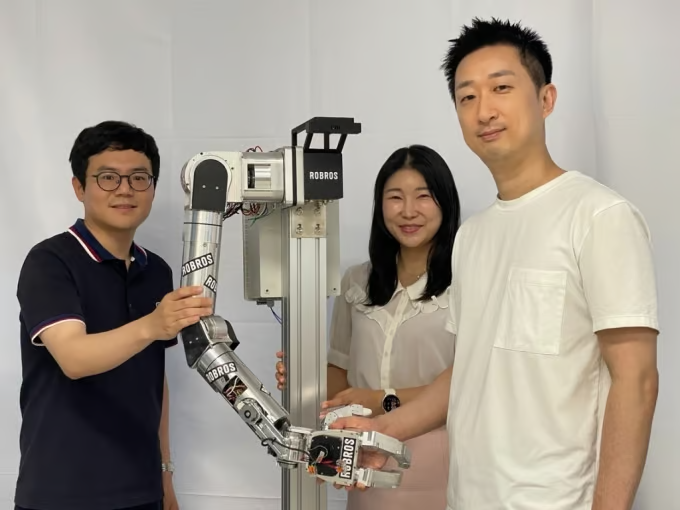
Robros still has a long road ahead. The company has reached the stage of running an imitation-learning robot that sorts objects with two arms. To succeed with a robot cafe, the robot must learn far more complex and concurrent motions. Dedicated hardware development is also needed, and Robros is developing its own robot hardware optimized for its AI.
Roh said the company can solve these challenges through talent. He said the expertise of the humanoid robot team is on par with big tech. The current development is led by CTO Park Hyunjoon, Advanced Technology Team Lead Im Dae-gyu, and Senior Researcher Park Sumin, all PhDs from the Seoul National University Department of Mechanical Engineering. Noh said it is an optimal team for building AI humanoid robots.
Venture capital firms are showing confidence. Last year, Robros raised 1.6 billion won in seed funding from Stick Ventures, Primer Saje Partners, and GS Retail. Noh said the company plans to seek additional funding soon.
Noh said many countries will face population decline and labor shortages, and Robros will prove that robots can address labor shortages not only in manufacturing but also in services.